01 / ACTION
Keep the lure swimming
A lure may lose vibration or tail action when it is too slow, or roll and rise when it is too fast.
Your retrieve can change how a lure swims, how deep it runs and how long it stays near fish. Learn practical starting speeds for different lures—and how to compare the results.
Use StrikeVision AI to explore reel-turn tracking, cadence coaching and fishing memory. There is no single perfect retrieve speed: adjust to your lure, depth, conditions and what the fish actually do.
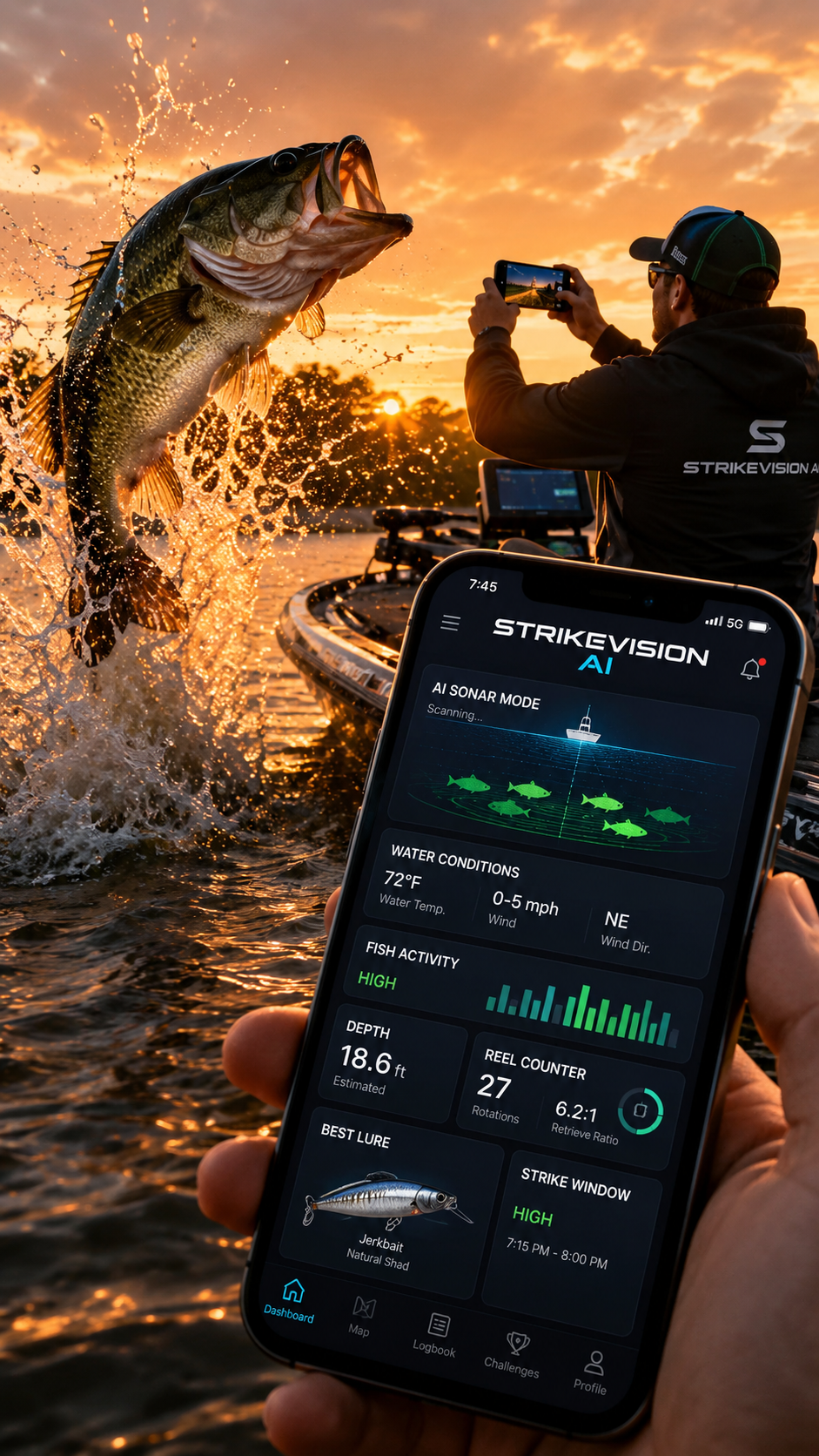
Practice a repeatable retrieve with guidance from StrikeVision AI.
Reeling changes lure action, running depth and the time fish have to react. A useful starting point is to make the lure work as designed and keep it near the water you want to fish.
A lure may lose vibration or tail action when it is too slow, or roll and rise when it is too fast.
Retrieve pace changes the depth of many presentations. Watch cover contact and line angle.
A pause, brief burst or direction change can create a different response than a constant retrieve.
Start with a functional lure action, then experiment. These are technique guidelines—not laboratory speeds or predictions.
| Lure | Starting retrieve | What to adjust |
|---|---|---|
| Crankbait | Steady enough to wobble and work near its designed depth. | Pause or speed up briefly after the bait touches rocks, bottom or wood. |
| Spinnerbait | Just fast enough to keep blades rotating in the target zone. | Slow-roll near deeper cover or speed up over grass when needed. |
| Paddle-tail swimbait | Smooth and slow enough to let the tail kick naturally. | Use subtle accelerations; avoid rolling the lure or rising too high. |
| Jerkbait | Twitch, pause, and recover slack rather than continuously reeling. | Try longer pauses in colder conditions and shorter pauses if fish chase. |
| Topwater walking bait | Short rod twitches with a repeatable left-right rhythm. | Change pause length and cadence around visible activity. |
| Jig or soft plastic | Often lift, hop, drag or pause instead of constant cranking. | Watch line for subtle strikes during the fall and pauses. |
No. Handle turns are a convenient way to compare your rhythm, but not a direct measurement of lure speed underwater.
Line pickup changes with spool fill, reel design and casting distance. Current, line angle and lure resistance also influence movement. Even two reels with the same gear ratio may retrieve different amounts of line per handle turn.
You can learn more from controlled comparisons than from guessing a universal speed.
Illustrative fishing technique, not a result generated by StrikeVision AI.
StrikeVision AI advertises phone-camera tracking of reel rotations, cadence, pauses and consistency, along with retrieve coaching and saved fishing patterns.
Use those tools as a practice aid while checking what your lure is actually doing. Camera tracking can be affected by lighting, positioning and visibility; depth and pace readouts should be treated as estimates.
Start at a steady pace that makes the crankbait wobble and reach its intended depth, then vary your speed or pause after cover contact. The exact pace depends on the lure, water temperature, current and fish response.
Reel fast enough for the blades to turn and slow enough to keep the lure in the strike zone. In colder water or near deeper cover, a slower presentation may be worth trying.
Start with a smooth, relatively slow retrieve that activates the tail without causing the bait to roll. Try short speed changes while keeping track of depth.
There is no universal number. The distance of line retrieved per handle turn varies by reel, and lure behavior matters more than a fixed turns-per-second target.
StrikeVision AI describes camera-assisted reel-turn and cadence tracking. Handle cadence is not a direct measurement of lure speed underwater; depth, line pickup, current and lure resistance all matter.
Varying retrieve speed can help you test how fish respond, but no speed guarantees a bite. Compare patterns and record which retrieve works in particular conditions.
Explore reel tracking, retrieve coaching, AI lure suggestions and fishing trip tools inside StrikeVision AI.
ONE-TIME ACCESS · NO MONTHLY SUBSCRIPTION
OPEN STRIKEVISION AIPricing reflects the existing StrikeVision AI website; confirm purchase details in the app.